


Behind the Blooms: What It Takes to Bring Tulip Season to Life at Stepp’s Hillcrest Orchard
Every spring, our tulip field transforms into a sea of color—bright petals, fresh air, and the kind of beauty that makes you stop and take it all in. Tulip season is one of our favorite times of year at Stepp’s Hillcrest Orchard, and we love seeing families, couples, photographers, and flower lovers enjoy the blooms.
But what many people don’t realize is that tulip season doesn’t start in spring… it starts months earlier.
Here’s a behind-the-scenes look at what goes into creating tulip season—from the ground up.
1. Prepping the Soil: Disc & Cultipack
Long before the bulbs ever go into the ground, the work begins with soil prep. Healthy tulips start with healthy soil, so we take the time to get the field ready the right way.
We disc the field to break up the ground and create a workable planting surface. Then we cultipack, which helps firm and smooth the soil—giving the bulbs a better environment to settle in and grow strong roots.
This step sets the foundation for everything that follows.
2. Planting the Bulbs: Early November
Once the soil is ready, it’s time for one of the most exciting steps: planting the tulip bulbs. We typically plant tulips in early November, when temperatures are cooler and the bulbs can be tucked into the soil just in time for winter to do its magic. It’s always a hopeful moment—because at this stage, you’re planting potential.
No flowers yet. No color. Just bulbs beneath the surface… and a whole lot of anticipation.

3. Tulips Need a Cold Dormant Period
Tulips aren’t like every other flower—they need winter. That cold dormant period is essential for tulips to develop properly. The chilly months help trigger the natural processes inside the bulb so that when spring arrives, the tulip is ready to wake up and grow. So while we’re bundled up and waiting out the cold, the bulbs are quietly doing exactly what they’re supposed to do underground.
4. Covering the Field with Wood Chips
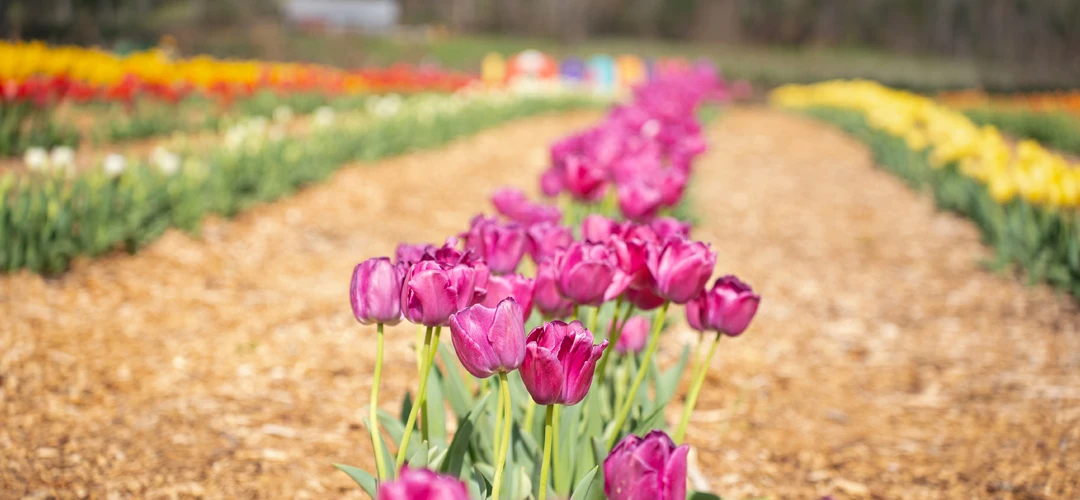
After planting, we cover the field with wood chips, and this step is a game changer for a couple of important reasons:
– Weed control: The wood chips help suppress weeds, keeping the field cleaner and reducing competition for nutrients.
– Easier access during harvest: Spring weather can be unpredictable, and nobody wants to walk through a muddy field! The wood chips help keep the field more manageable during harvest so it isn’t a soggy mess.
It’s one of those behind-the-scenes details that makes a big difference in how smoothly tulip season runs.
5. The Bulb Holds Everything the Flower Needs
Here’s one of the coolest things about tulips: the bulb already contains everything needed to produce the flower.
Inside that small bulb is a fully formed plan—energy, nutrients, and the blueprint for the bloom. Once conditions are right, it’s ready to grow.
It’s nature’s little powerhouse, and it never stops amazing us.
6. Waiting for the First Shoots… Then the First Blooms
And then comes the waiting.
Once winter fades and temperatures begin to rise, we start watching the field. We anxiously await the first green shoots, those tiny signs that the tulips are waking up.
And when the first blooms finally open? It’s amazing!
Every year, it feels like a reward—for the work, the patience, and the months of preparation that led up to that moment.

Tulip Season Is More Than a Bloom
Tulip season may look effortless when the field is bursting with color, but behind every bloom is a whole season of planning, planting, protecting, and waiting.
We’re so excited to share this beautiful time with you, and we can’t wait for you to experience tulip season at Stepp’s Hillcrest Orchard—where spring truly comes to life.
See you in the tulips!